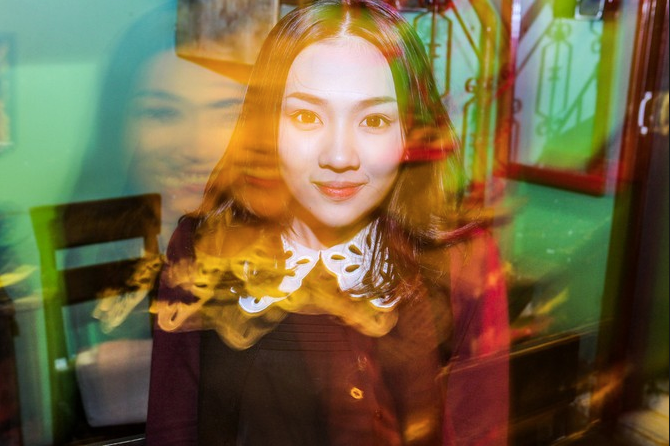
Slow sync and high key - work diary:
In todays session we was working on the technique slow sync. Slow sync works with a long extended flash and slow shutter speed along with a movement that takes place during that flash. I found that the concept of the technique is quite easy, however i personally found that it was quite hard to think of movements to do that would show a effective slow sync photograph.
Progression:
If i was to do this task again i would think about the images that i would be producing. I think that i would need to develop my ideas further to think about how i would like my final image to look. I think that in doing this i would be happier with the images that i produce and that they would be more effective and show a more developed idea of the technique.

Above is an example of slow sync, i think that this photograph examples this technique effectively as there is the part of the photograph that is well exposed and well lit, as well as the part of the photograph that is distorted and showing the movement that is being made.

The image above is another example of a slow sync photograph, the background is blurred and the light around the subject as been distorted. The subject being in focus helps to develop the technique by give the eye something to compare the movement to.

Above and below are my attempts at slow sync photography. I think that the idea of what i was trying to achieve came across in the photo above as you can see the movement of the ball and where its traveling. However i think that the distortion of Lauren's face (on the left) lets the photo down as that would be the part of the image that i would want to keep in focus.
I think that the photograph below is a better attempt as the parts of the photograph that i wanted in focus stayed that way, however in the photograph you can still see the movement yet they are not as defined as i had wanted.

High key photography:
In this session we was working on the technique of High Key, high key works with the use of lighting to define the subjects of your photograph. You generally have an all white background and use the lights t focus on the subject to get the photo a well defined as possible.
Progression:
I enjoyed the session on high key as i found that it was quite easy to use and was a very simple but effective technique. I think that the photos that i produced worked well at demonstrating the technique, and i think that this technique could be something i continue to use during the rest of my project. I think that because my topic is style the technique will work well as it will be an effective way of demonstrating the different styles that i want to show.

Above and below are two examples of high key photography. In both the colours are all smooth and bright so that they stand out. The white background lets the two people standout without making them look washed out or pale. The effect also help to see all of the features of the face especially peoples eyes making the colours standout.


Above and below are my two examples of high key photography. I think that my photographs work because of the white background meaning that the subject stands out in the photograph. I like the way that the technique works to show the face and the clothes. I think that this will be a good technique for my project.